
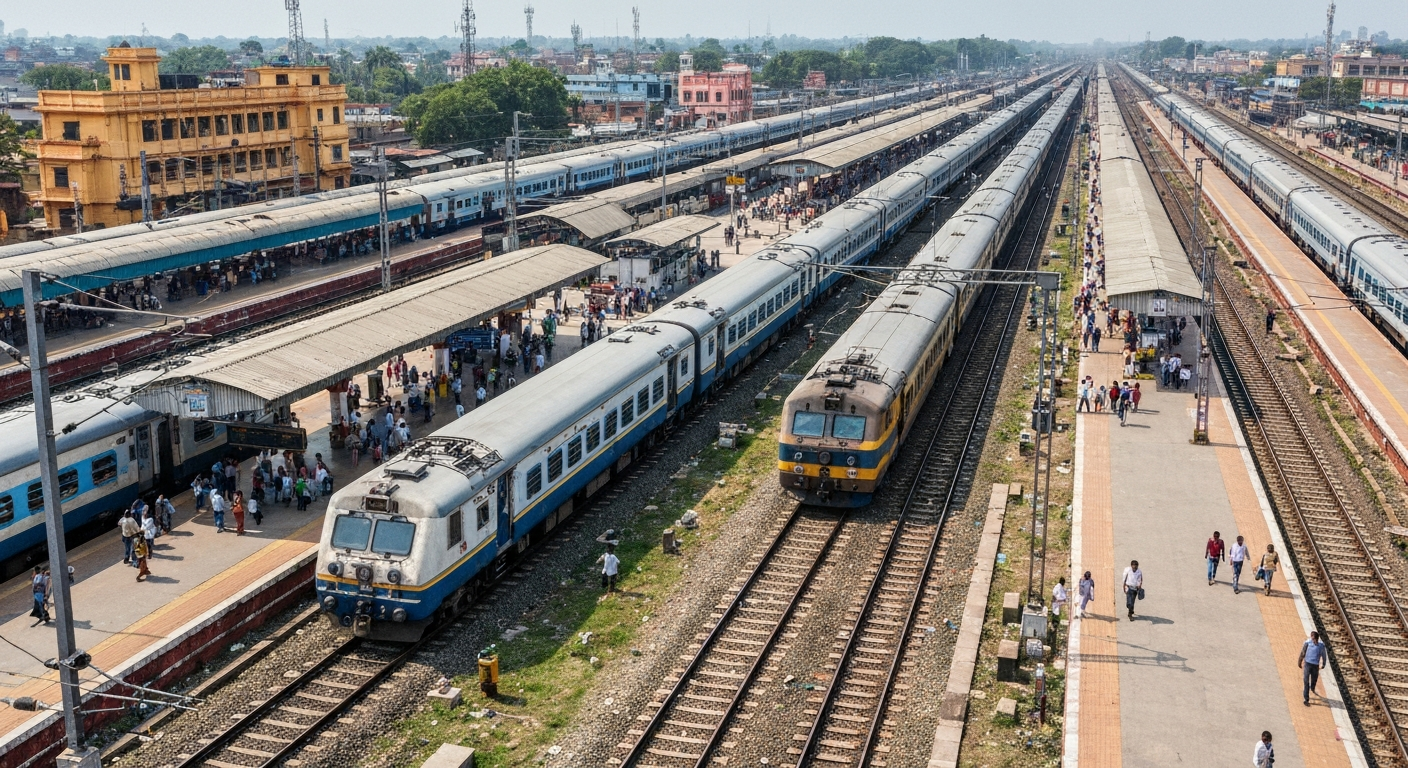
Key Highlights
- India is home to one of the world’s largest railway networks, featuring some of the biggest and busiest stations.
- Howrah Junction in West Bengal stands as India’s largest railway station, with 23 platforms.
- Major terminals like New Delhi Railway Station and Mumbai’s Chhatrapati Shivaji Maharaj Terminus serve millions of passengers daily.
- Understanding station codes, railway maps, and station types (junctions, terminals, halts) is key to smooth travel.
- Major Indian train stations offer various amenities, including waiting rooms, food courts, and booking counters.
Introduction
Welcome to the incredible world of Indian Railways, a network that acts as the lifeline for millions of people across the country. Dotted along this vast system are thousands of railway stations, each with its own story and significance. From bustling urban terminals to quiet rural halts, these stations are more than just transit points; they are gateways to India’s diverse culture and landscapes. This guide will take you through some of the most important and major railway station hubs in India.
Major Train Stations in India: Key Terminals for Travelers
India’s major cities are connected by a web of impressive train stations that handle immense passenger traffic daily. These terminals are not just large in size but also serve as a major hub for commerce, culture, and connectivity. When traveling through India, you will likely pass through at least one of these monumental structures.
Each major railway station has unique features, history, and operational significance. From the busiest railway station in terms of footfall to architectural marvels, these terminals are landmarks in their own right. Let’s explore some of the top train stations that are crucial for any traveler in India.
1. Howrah Junction, Kolkata – India’s Largest Railway Station
Located in Howrah, West Bengal, Howrah Junction (HWH) holds the title of the largest railway station in India. Established in 1854, it is also the oldest and one of the busiest railway complexes in the country. With an impressive 23 platforms and 25 tracks, it manages a staggering number of trains and passengers every single day.
This station is a critical part of the railways in eastern India, serving the Kolkata metropolitan area. It falls under the jurisdiction of both the Eastern Railway and the South Eastern Railway, making it a pivotal point for countless passenger journeys. Its sheer scale and constant activity also place it among the world’s largest and most active train stations.
The historical significance and bustling atmosphere of Howrah Junction make it a landmark. It’s not just a station but a city within a city, connecting numerous regions and people across the nation. For many, it is the starting point of their great Indian rail adventure.
2. New Delhi Railway Station – Central Hub for North India
Situated in the heart of India’s capital, the New Delhi Railway Station (NDLS) is a key transportation hub for North India. Operated by the Northern Railway, this station is crucial for connecting the capital to almost every corner of the country. It is known for its high volume of passenger traffic, handling over 200,000 passengers on a regular day.
The Delhi railway station has expanded significantly since its inauguration to manage its massive traffic. With 16 platforms and 18 tracks, it accommodates around 235 trains daily. During peak seasons, the number of passengers can swell to over half a million, highlighting its importance in the national network.
Furthermore, the New Delhi Railway Station holds a world record for having the largest route relay interlocking system, a testament to its complex and efficient operations. As a major gateway for tourists and daily commuters alike, it plays a vital role in the life of the city and the nation.
3. Chhatrapati Shivaji Maharaj Terminus, Mumbai – Iconic Heritage Terminal
The Chhatrapati Shivaji Maharaj Terminus (CSMT) in Mumbai is not just a train station; it is an architectural masterpiece and a UNESCO World Heritage Site. Originally known as Victoria Terminus, this station is a symbol of Mumbai’s rich history and architectural grandeur. Its stunning Victorian-Gothic design makes it one of the most recognizable landmarks in India.
Opened in 1853 and later rebuilt, this World Heritage Site is a bustling hub for both long-distance and local suburban trains in Mumbai. The station was renamed to honor Shivaji, the founder of the Maratha Empire, and in 2017, it became the Chhatrapati Shivaji Maharaj Terminus.
With 18 platforms, CSMT is a vital link in the Central Railway zone, connecting India’s financial capital to the rest of the country. It stands as a perfect blend of heritage and modern functionality, serving millions of travelers while preserving its historic charm.
4. Chennai Central – Gateway to South India
As the main gateway to South India, Chennai Central is a vital railway terminus in Chennai, Tamil Nadu. Officially known as Puratchi Thalaivar Dr. M.G. Ramachandran Central Railway Station, this historic and iconic station connects the city to major destinations across the nation. Its distinct red-brick structure is a famous landmark.
This station is a key hub for the Southern Railway zone, serving approximately 550,000 passengers daily. With 17 platforms, the Chennai Central Railway Station accommodates both long-distance express trains and suburban services, making it an essential part of the region’s transport network.
The architectural significance of Chennai Central, combined with its role as a major transportation hub, makes it one of the most important stations in the country. Whether you’re exploring Tamil Nadu or traveling further into South India, your journey will likely involve this bustling terminal.
5. Sealdah Railway Station, Kolkata – Bustling Eastern Terminal
Alongside Howrah, the Sealdah Railway Station (SDAH) is another critical terminal in Kolkata, West Bengal. It is renowned for being one of India’s busiest stations, especially in terms of daily passenger footfall, with over 1.2 million people passing through it every day. This makes it an incredibly important suburban rail terminal.
As a part of the Eastern Railway zone, Sealdah handles a massive volume of passenger trains connecting Kolkata with nearby towns and districts. The station features 21 platforms and 28 tracks, which are essential for managing the dense flow of local and long-distance trains.
Its role in serving daily commuters is unparalleled, making it the lifeline for many who travel to the city for work. The constant buzz of activity at Sealdah Railway Station gives you a true sense of the scale and pace of life in Kolkata.
Navigating Indian Railway Stations: Codes, Maps, and Types
Navigating the vast Indian railway network can seem daunting, but a few key pieces of information can make your journey much smoother. Every Indian railway station has a unique station code, which is essential for booking tickets and identifying locations. Using a map of India with railway lines can also help you plan your route effectively.
Furthermore, it’s helpful to understand that there are different types of railway stations, each serving a specific purpose. Knowing the difference between junctions, terminals, and halts can give you a better understanding of your travel itinerary. Let’s explore these elements to make you a more confident train traveler.
Understanding Station Codes and Their Importance
Every Indian railway station is assigned a unique station code, typically a short abbreviation of its name. For example, New Delhi Railway Station is NDLS, and Howrah Junction is HWH. This code is crucial for avoiding confusion, as many cities have multiple stations. When you book a ticket, using the correct station code ensures you are booking for the right location.
These codes are used universally across all booking platforms, timetables, and station signboards. You can easily find the station code for any particular station through several methods.
- Online Search: A quick search on the Indian Railways website or other travel portals will give you the code.
- Train Tickets: The station code is always printed on your train ticket next to the station name.
- Station Lists: Various websites provide a complete station list with their corresponding codes.
Understanding and using these codes is a simple yet effective way to ensure your travel plans are accurate and stress-free.
Using Indian Railways Maps for Route Planning
An Indian Railways map is an invaluable tool for planning your journey. These maps show the extensive network of railway lines that connect thousands of railway stations across the country. You can find official and unofficial maps online that show all major and minor routes. Reading a railway map is straightforward: lines represent tracks, and dots or names indicate stations.
By tracing the railway line between two points, you can understand the potential route your train will take and see the major stations it will pass through. This is particularly useful for planning multi-city trips or understanding the connectivity between different regions. For example, a map would clearly show the primary route connecting major northern and southern cities.
Here is a simple example of how routes between major railway stations might be represented:
| Start Station | Major Stations on Route | End Station |
|---|---|---|
| New Delhi (NDLS) | Kanpur (CNB), Prayagraj (PRYJ) | Howrah (HWH) |
| Mumbai (CSMT) | Vijayawada (BZA) | Chennai (MAS) |
Types of Railway Stations in India: Junctions, Terminals, and Halts
Not all railway stations are the same. In India, they are broadly categorized based on their function and track layout. Understanding these types can help you better plan your travel. The three main types you will encounter are junctions, terminals, and halts.
Each type of railway station plays a distinct role in the network. A major hub might be a junction, while a train’s journey might start or end at a terminal.
- Junctions: These are stations where at least three different railway lines converge or diverge. For example, Kharagpur Junction is a major junction. Trains can arrive from multiple directions and switch routes here.
- Terminals (or Terminus): These are stations where a railway line ends. Trains can only enter and exit in one direction. Chhatrapati Shivaji Maharaj Terminus is a prime example.
- Central Stations: These are typically the busiest and most important stations in a city, like Kanpur Central.
- Halts: These are the smallest stations, often with minimal facilities, where only a few passenger trains stop, usually in rural areas.
Conclusion
In conclusion, navigating India’s extensive railway network can be an enriching experience when equipped with the right knowledge. Understanding major train stations—like Howrah Junction or New Delhi Railway Station—enhances your travel plans significantly. Additionally, familiarizing yourself with station codes and utilizing maps allows for smoother transitions during your journey. As you explore the rich tapestry of India by train, remember to take advantage of the amenities available at these key terminals. Planning your trips well will not only save you time but also ensure an enjoyable adventure through this vibrant country. If you have any questions or need assistance in planning your next railway journey, feel free to reach out!
Frequently Asked Questions
What amenities are available at major Indian train stations?
Major railway stations like New Delhi, Chennai Central, and Howrah Junction offer a wide range of amenities for travelers. These typically include waiting rooms, air-conditioned lounges, food courts, clean restrooms, baggage storage facilities (cloakrooms), and ticket booking counters to ensure a comfortable travel experience.
How many railway stations are there in India?
The Indian Railways network is one of the largest in the world, with over 7,000 to 8,000 railway stations spread across the country. A complete station list would show that states like Uttar Pradesh have a very high density of stations, reflecting the network’s extensive reach.
Where can travelers check train schedules and station information online?
You can check train schedules and information for all train stations on the official Indian Railways website (indianrail.gov.in) and the IRCTC portal. These platforms provide real-time updates on train arrivals, departures, and platform numbers for any railway station, including major hubs like New Delhi Railway station or Chhatrapati Shivaji Terminus.